
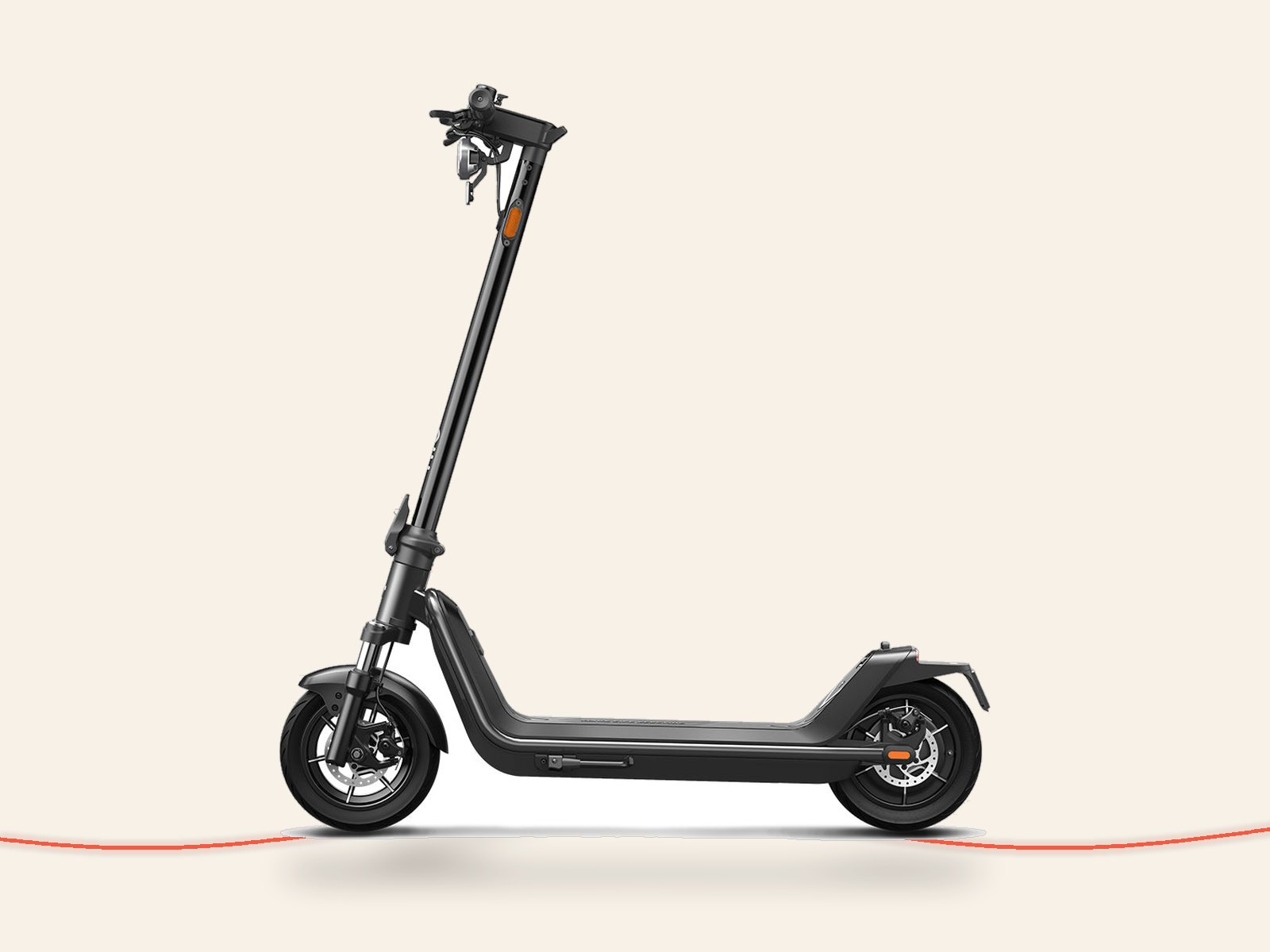
NIU KQi 300P
- Why shortlist it
- Dual-tube hydraulic suspension and IP55 water resistance at a genuinely entry-level price for the feature set.
- Trade-off
- Smaller 486 Wh battery than its 300X sibling gives noticeably less real world range.
Compare current NIU electric scooters in Australia by price, realistic range estimate, weight, suspension, brakes, payload and stock status.
NIU's Australian scooter range is focused on urban commuters. The main buying differences are battery size, suspension, total weight and current stock, so compare the exact KQi model rather than choosing on the family name alone.
This catalogue shortlist is generated from ScootFinder's NIU catalogue and excludes previous-generation models when current alternatives are available.
Range estimates are ScootFinder estimates unless a tested result is explicitly labelled. Claimed range is the manufacturer's published best-case figure.
| Model | Dated price, AUD | Range, Estimated | Range, Claimed | Weight | Payload | Top speed | Legal class |
|---|---|---|---|---|---|---|---|
| NIU KQi 300P | $1,299 | 34 km | 48 km | 20.8 kg | 120 kg | 25 km/h | 25 km/h capable |
Current and new-release adult NIU models are compared using published specifications, known Australian pricing and ScootFinder planning estimates. Current stock should always be confirmed before purchase.
A 25 km/h-capable label is a speed feature, not public-use approval. Device weight, dimensions, wheelbase, maximum power and Australian configuration can change the result. It does not override where, how fast or by whom it may be ridden. Check the current official rule for your jurisdiction before buying or riding.
The best model depends on trip length and surface quality. Compare current KQi models on estimated range, weight, suspension and brakes, then confirm Australian stock.
Battery capacity, suspension, tyre size, brakes and weight vary across the line-up. The live comparison table shows the current specification differences side by side.
A 25 km/h device specification can fit the relevant device class, but public-riding rules, locations and rider requirements still vary by state and territory.