Electric scooter laws in Australian Capital Territory: what is legal in 2026
A private PMD must weigh no more than 60 kg, fit 1250 x 700 x 1350 mm, have brakes and a maximum speed of 25 km/h on level ground. Riding caps are 15 km/h on footpaths, 25 km/h on shared and bicycle paths, and 10 km/h across crossings. Roads are exceptional when adjacent paths are unavailable, unsafe or impractical; return to a path by the shortest practical route. Under 12s need adult supervision.
Last reviewed 17 Oct 2026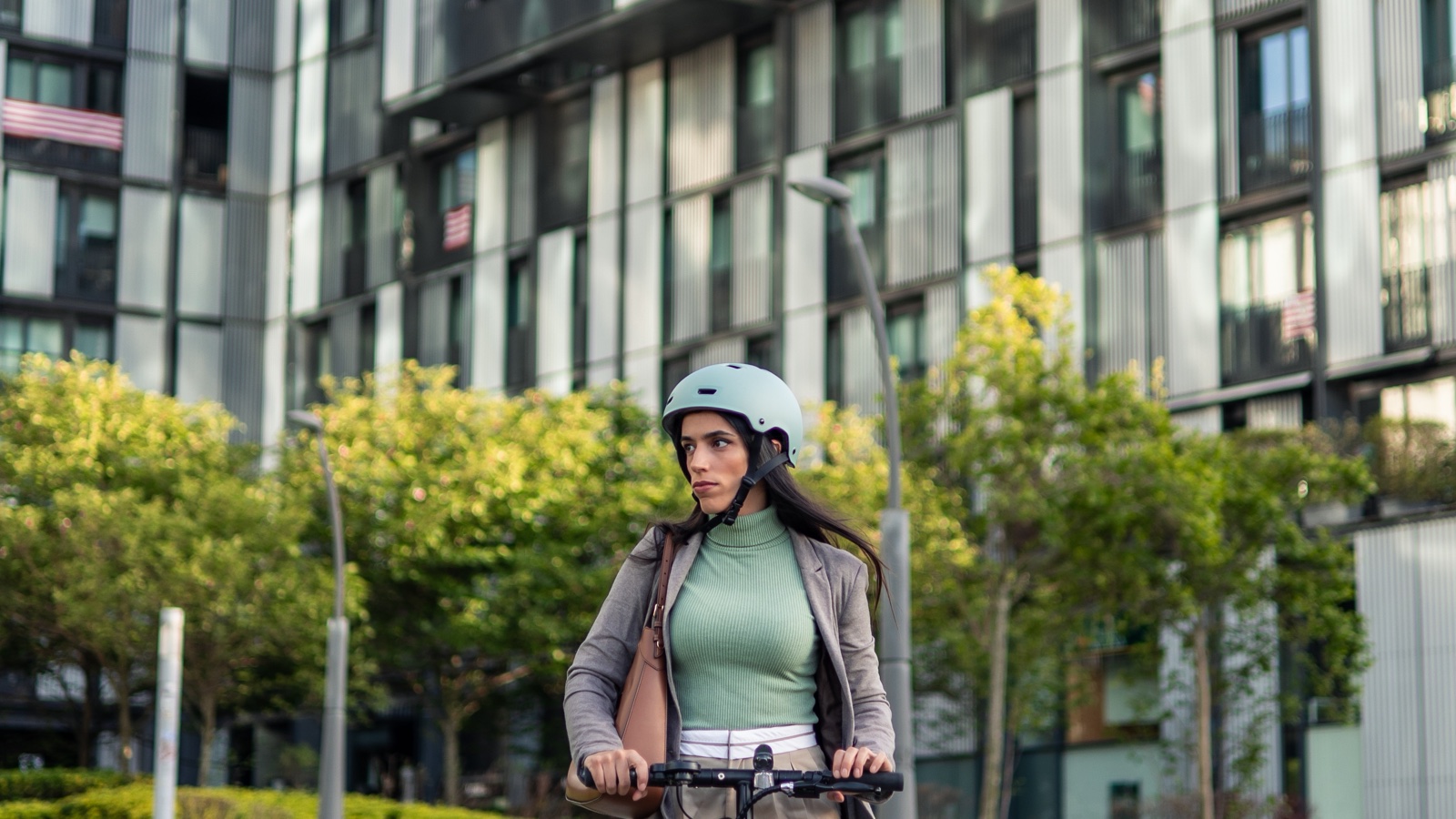
Woman in a helmet riding an electric scooter past apartment buildings. Photo for illustration.
Key points
- Check the exact Australian unit, not an overseas or sibling model.
- Maximum device capability and riding-speed caps are different.
- Unknown required dimensions, wheelbase, power or configuration are not an approval.
Before you buy or ride
A private PMD must weigh no more than 60 kg, fit 1250 x 700 x 1350 mm, have brakes and a maximum speed of 25 km/h on level ground. Riding caps are 15 km/h on footpaths, 25 km/h on shared and bicycle paths, and 10 km/h across crossings. Roads are exceptional when adjacent paths are unavailable, unsafe or impractical; return to a path by the shortest practical route. Under 12s need adult supervision.
Australian Capital Territory: check the exact device
No more than 60 kg and 1250 x 700 x 1350 mm, effective brakes and maximum 25 km/h capability on level ground.
Riding speed and places
15 km/h on footpaths, 25 km/h on shared and bicycle paths, 10 km/h at crossings. Roads only when an adjacent path or nature strip is absent, unsafe or impractical; use the shortest practical route back to a path.
Rider age, licence and exceptions
Riders under 12 must be supervised by an adult; shared hire operators may impose a higher age.
ACT Government City Services current guidance, checked 2026-10-17. Check a specific device for ACT.
Use the buyer tools carefully
Filter the scooter directory, compare your shortlist and check the model for your state. Results use published evidence, not a physical certification. Confirm working brakes, warning device, lights, helmet, route signs and rider eligibility before riding.
Law updates, new models and buying guides for Australian e-scooter riders, straight to your inbox.
The speed on a display is not the whole device definition.
Frequently asked questions
Does a speed mode or retailer label establish legal eligibility?
No. Check maximum device capability, required weight, dimensions, stopping equipment and any wheelbase or power definition. Missing evidence stays unconfirmed. Rider conditions and permitted locations are separate.
What does Queensland's February 2027 transition mean?
The current PMD definition includes motor-only capability no more than 25 km/h. Through 28 February 2027, a transition covers devices manufactured before 1 July 2026 that met the former definition. A model year or app mode does not establish this exception; we do not presume it for unverified units.
Sources
- ACT Government City Services (checked 17 Oct 2026)
- ACT operative legislation and history (checked 17 Oct 2026)