WA's e-rideable inquiry, six months on
In March 2026 the WA Government backed 32 of the 33 recommendations from its parliamentary inquiry into e-rideables, and asked Canberra to act on imports and tampering. Six months later the everyday road rules for e-scooter riders in WA are unchanged, and the biggest piece of the puzzle has moved to the national level.
Last reviewed 26 Sep 2026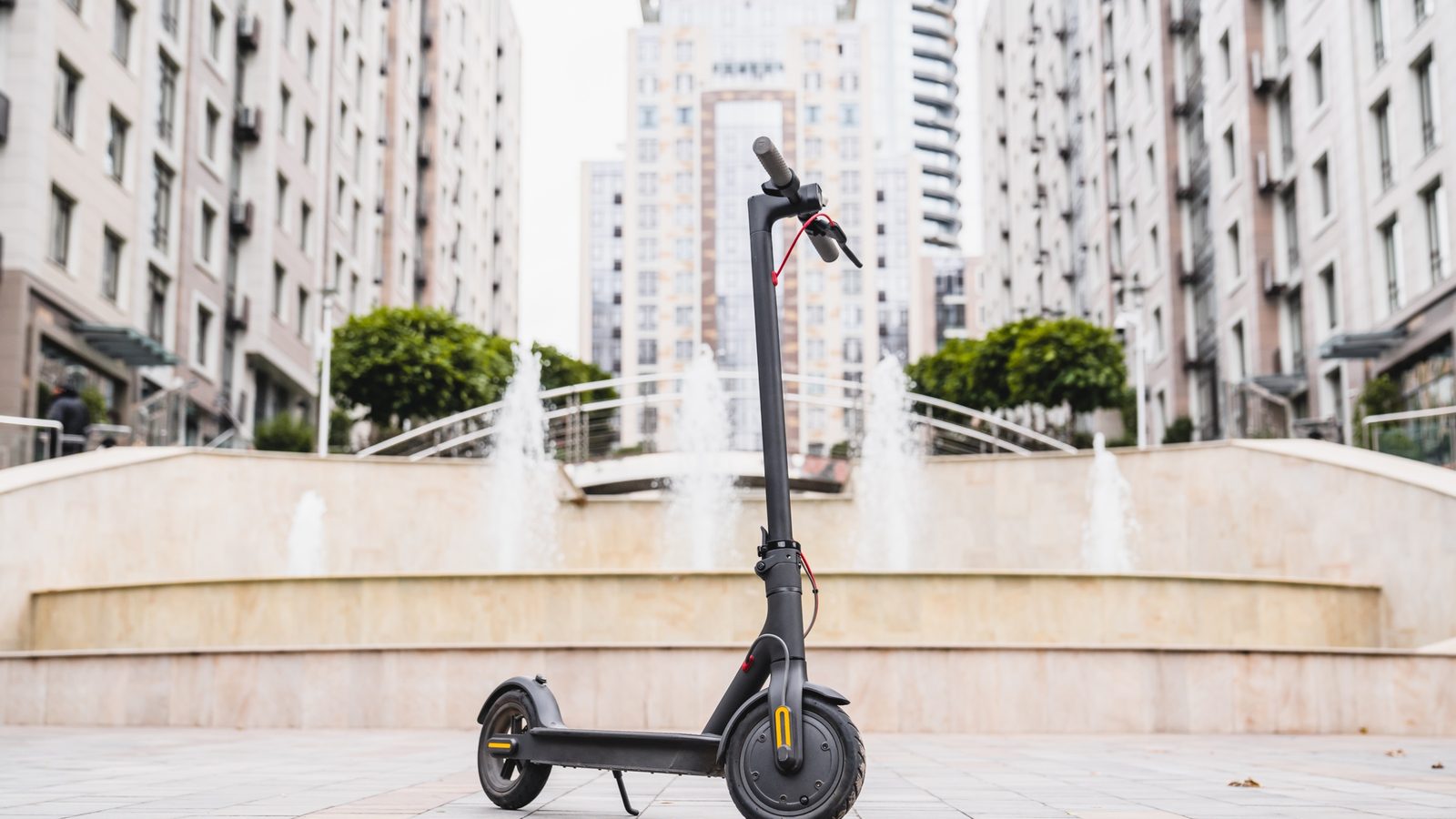
Electric scooter parked on a paved city plaza in front of apartment towers. Photo for illustration.
Key points
- The WA Government supported, or supported in principle, 32 of the 33 recommendations of the Ride Safe inquiry report on 10 March 2026.
- Supported measures include dismount zones in entertainment precincts, letting councils declare their own dismount zones, treating e-rideables as motor vehicles for alcohol and drug testing, a penalty review and school education.
- WA asked the Commonwealth for tougher import controls, a ban on tampering and mandatory speed limiting technology.
- The federal government answered part of that on 6 August 2026 by directing the ACCC to build a national safety standard that covers e-scooters.
- As at late September 2026 we could find no change to WA's core e-scooter rules: 16 and over, helmet on, 10 km/h on footpaths and 25 km/h elsewhere.
Western Australia's reckoning with e-rideables began after a run of serious crashes, including the death of Perth father Thanh Phan in 2025. The Legislative Assembly inquiry that followed delivered its Ride Safe report in December 2025, and the government gave its response in March. Here is what that response promised and where it has landed.
What the government agreed to
On 10 March 2026, Transport Minister Rita Saffioti, Road Safety Minister Reece Whitby and Assisting Minister Jessica Stojkovski announced that the government supported, or supported in principle, 32 of the inquiry's 33 recommendations. The supported measures include designated dismount zones, including in Protected Entertainment Precincts, powers for local governments to declare extra dismount zones, treating e-rideables as motor vehicles for alcohol and drug testing, a review of penalties, e-rideable education in WA schools, and more safe spaces to ride.
What WA asked Canberra for
The government's main message was that the biggest problems sit outside state control. WA asked the Commonwealth for tougher import controls, a ban on device tampering, stronger national classifications, mandated speed limits and speed limiting technology, and audible alerts as standard. The ABC reported at the time that the review would not bring immediate changes to state law.
What has happened since
The Commonwealth has moved on part of WA's list. On 6 August 2026 it directed the ACCC to develop national safety standards for e-bikes and e-micromobility devices, including e-scooters. Consultation is expected in late 2026, and e-bikes come first. We cover the detail in our story on the national e-scooter safety standard.
At state level, police have kept seizing and crushing illegal, overpowered devices, and Operation Moorhead, which began on 5 January 2026, had seized 76 illegal devices and charged 76 offenders, 61 of them juveniles, by the time of the March response. As at late September 2026, we could find no announced change to the core road rules for e-scooter riders.
The rules that apply in WA today
Private e-scooters are legal on footpaths, shared paths, bike paths and local roads with a limit of 50 km/h or less. Riders must be 16 or older and wear a helmet. The limit is 10 km/h on footpaths and 25 km/h elsewhere, and the scooter itself must not be able to exceed 25 km/h. Our WA e-scooter law guide has the full detail and the official source.
What it means for riders
If you ride a legal-class scooter within the limits, nothing has changed for you yet. If you ride an unlimited or modified scooter, WA's direction of travel is clear: seizure and crushing now, and national rules on tampering later. Dismount zones in entertainment precincts are the change most likely to reach riders first, so watch for signage. To check a model before you buy, filter the directory for legal-class scooters.
Law updates, new models and buying guides for Australian e-scooter riders, straight to your inbox.
WA has agreed on almost everything. What is left depends on Canberra, and on what shops are allowed to sell.
Frequently asked questions
Have WA's e-scooter laws changed in 2026?
As at late September 2026 we could find no change to WA's core e-scooter road rules. The government backed 32 of 33 inquiry recommendations in March 2026, including dismount zones and treating e-rideables as motor vehicles for drug and alcohol testing, but these had not been announced as in force.
What are the e-scooter rules in WA?
Riders must be 16 or older and wear a helmet. E-scooters can be ridden on footpaths at up to 10 km/h and on shared paths, bike paths and local roads with a limit of 50 km/h or less at up to 25 km/h. The device must not exceed 25 km/h.
Can WA police seize an e-scooter?
Yes. WA Police seize illegal devices and the government has said overpowered devices will be crushed.
What did WA ask the federal government to do about e-scooters?
Tougher import controls, a ban on tampering, stronger national classifications, mandatory speed limits and speed limiting technology, and audible alerts as standard.
Sources
- WA Government: WA leads national push for stronger eRideable laws (10 March 2026) (checked 26 Sep 2026)
- ABC News: Landmark review into WA's e-rideable laws will not result in immediate change (10 March 2026) (checked 26 Sep 2026)
- WA Road Safety Commission: eRideables (checked 26 Sep 2026)
- Media release: Stronger product safety standards for e-bikes (6 August 2026) (checked 26 Sep 2026)