A national e-scooter safety standard is coming. What it means if you are buying now
On 6 August 2026 the federal government directed the ACCC to develop nationally consistent safety standards for e-bikes and other e-micromobility devices, and e-scooters are included. Consultation is expected to start late this year, with e-bikes first in line. Nothing changes at the checkout yet, so here is how to buy a scooter that will still make sense once the rules arrive.
Last reviewed 26 Sep 2026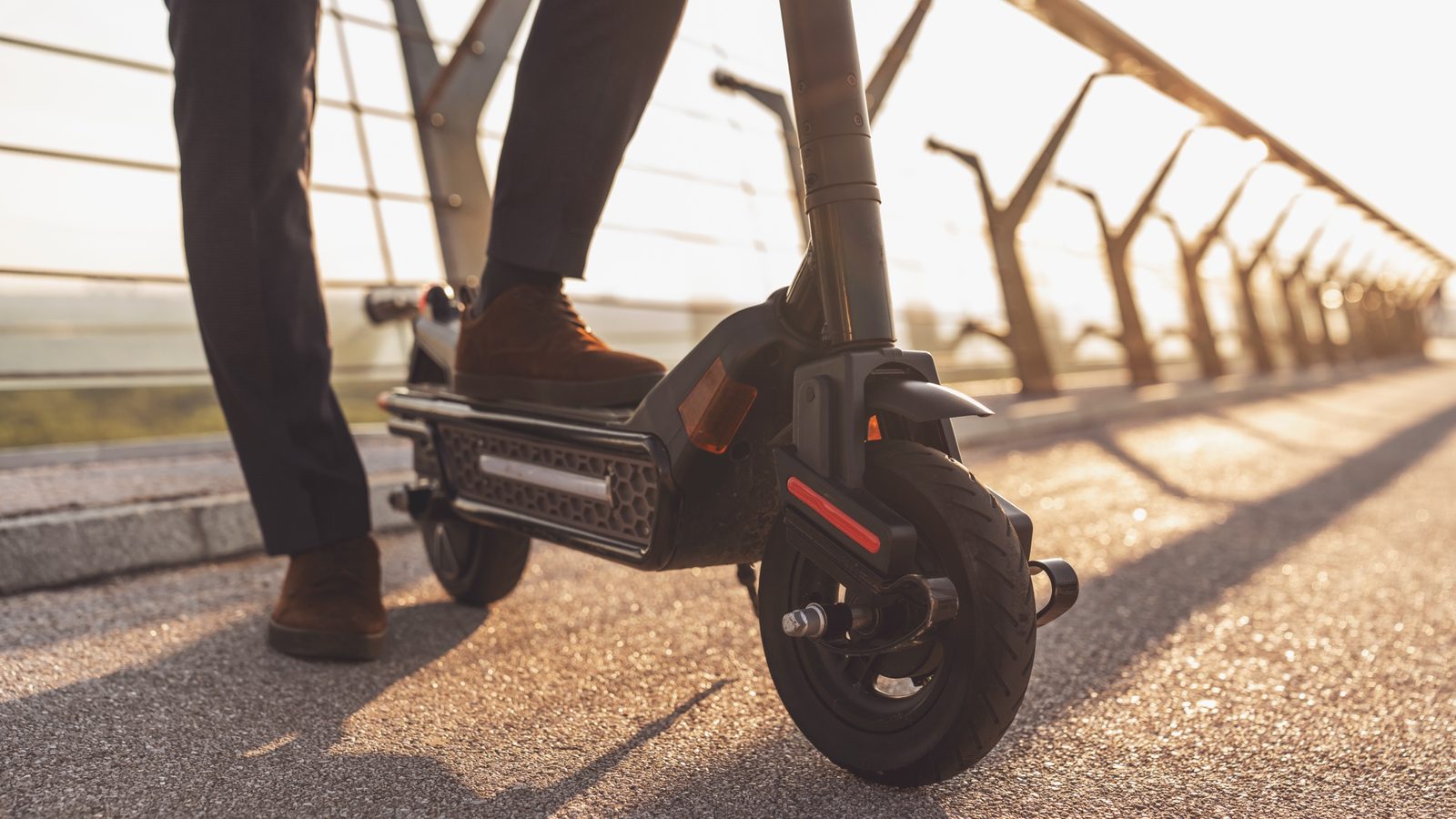
Close up of an electric scooter deck and rear wheel on a path at sunset. Photo for illustration.
Key points
- On 6 August 2026, Transport Minister Catherine King and Assistant Minister Andrew Leigh directed the ACCC to develop national safety standards for e-bikes and e-micromobility devices under Australian Consumer Law.
- E-scooters and e-skateboards are covered, but the ACCC says e-bikes are the first priority.
- The government is putting $6.6 million into strengthening the product safety framework.
- The ACCC expects stakeholder consultation to begin in late 2026. No start date for the standard has been announced.
- Until it lands, the rules that decide whether you can ride a scooter are still your state's road rules and the 25 km/h device limit.
Australia's patchwork of e-scooter rules has always had a gap at the shop counter. States set where and how fast you can ride, but nothing national has stopped overpowered devices and cheap batteries being sold in the first place. That is now changing, slowly.
What was announced
On 6 August 2026, Transport Minister Catherine King and Assistant Minister Andrew Leigh announced that the ACCC will develop nationally consistent safety standards for e-bikes and e-micromobility devices under Australian Consumer Law. The announcement names e-scooters and e-skateboards alongside e-bikes, and uses the European e-bike standard EN 15194 as the guide for e-bikes. The government is investing $6.6 million in strengthening the product safety framework, and state and territory consumer affairs ministers discussed the work at their meeting on 30 July.
Why now
The ACCC says it was funded in May 2026 in response to a rise in injuries and deaths linked to e-micromobility devices, with lithium-ion battery fires a particular concern. Its product safety page points to motors over 1,000 watts, speeds above 50 km/h and high-capacity, low-quality, unbranded batteries as the growing problems. Several states have been asking for national action: Western Australia's government, for example, asked the Commonwealth in March for tougher import controls and a ban on tampering.
When it will apply to e-scooters
Not yet, and probably not soon. The ACCC says e-bikes are the first priority, its investigation into e-bike options began in June 2026, and stakeholder consultation is expected to start in late 2026. No completion date has been published for any part of the standard, and no date at all for e-scooters specifically.
What it means if you are buying now
The standard will govern what shops can sell. It does not change where you can ride, which is still set by each state. So the safest purchase today is one that already fits where the rules are heading:
- Buy a legal-class scooter. Every state that allows private e-scooters requires the device to be limited to 25 km/h. Our directory flags which models meet it; start with legal-class scooters, and read legal class vs private land scooters if the difference is new to you.
- Buy a known brand from an Australian seller. A local distributor means warranty, parts and a recall path if something goes wrong. Unbranded batteries are exactly what regulators are targeting.
- Treat the charger and battery as safety gear. Use the charger that came with the scooter, charge while you are awake, and stop using a battery that swells or smells. Our battery care and fire safety guide covers the details.
What to watch for next
The next milestone is the ACCC's stakeholder consultation, expected in late 2026. We will cover it when it opens, including anything that would affect e-scooters already on sale. For the rules that apply today, see our state by state legality guide.
Law updates, new models and buying guides for Australian e-scooter riders, straight to your inbox.
A national standard will decide what can be sold. Your state still decides what can be ridden. Buy for both.
Frequently asked questions
Is there a national safety standard for e-scooters in Australia?
Not yet. On 6 August 2026 the federal government directed the ACCC to develop nationally consistent safety standards for e-bikes and e-micromobility devices, including e-scooters. The ACCC expects consultation to begin in late 2026 and has not announced a start date.
Does the new standard change where I can ride my e-scooter?
No. The standard is about what can be sold. Where and how fast you can ride is still set by each state and territory's road rules.
Will my current e-scooter become illegal?
Nothing announced so far applies to scooters people already own. Whether your scooter can be ridden in public depends on your state's rules, including the 25 km/h device limit.
What should I look for when buying an e-scooter before the standard arrives?
A scooter limited to 25 km/h, from a known brand with an Australian distributor, supplied with its own charger and a battery with clear safety certification.
Sources
- Media release: Stronger product safety standards for e-bikes, Catherine King and Andrew Leigh (6 August 2026) (checked 26 Sep 2026)
- ACCC Product Safety: E-bikes, e-scooters and other e-micromobility devices (checked 26 Sep 2026)
- WA Government: WA leads national push for stronger eRideable laws (10 March 2026) (checked 26 Sep 2026)