E-scooter glossary: 20 terms every buyer should know
Twenty terms you'll run into across spec sheets, reviews and road rules on ScootFinder, defined plainly, without assuming you already know the jargon.
Last reviewed 19 Jul 2026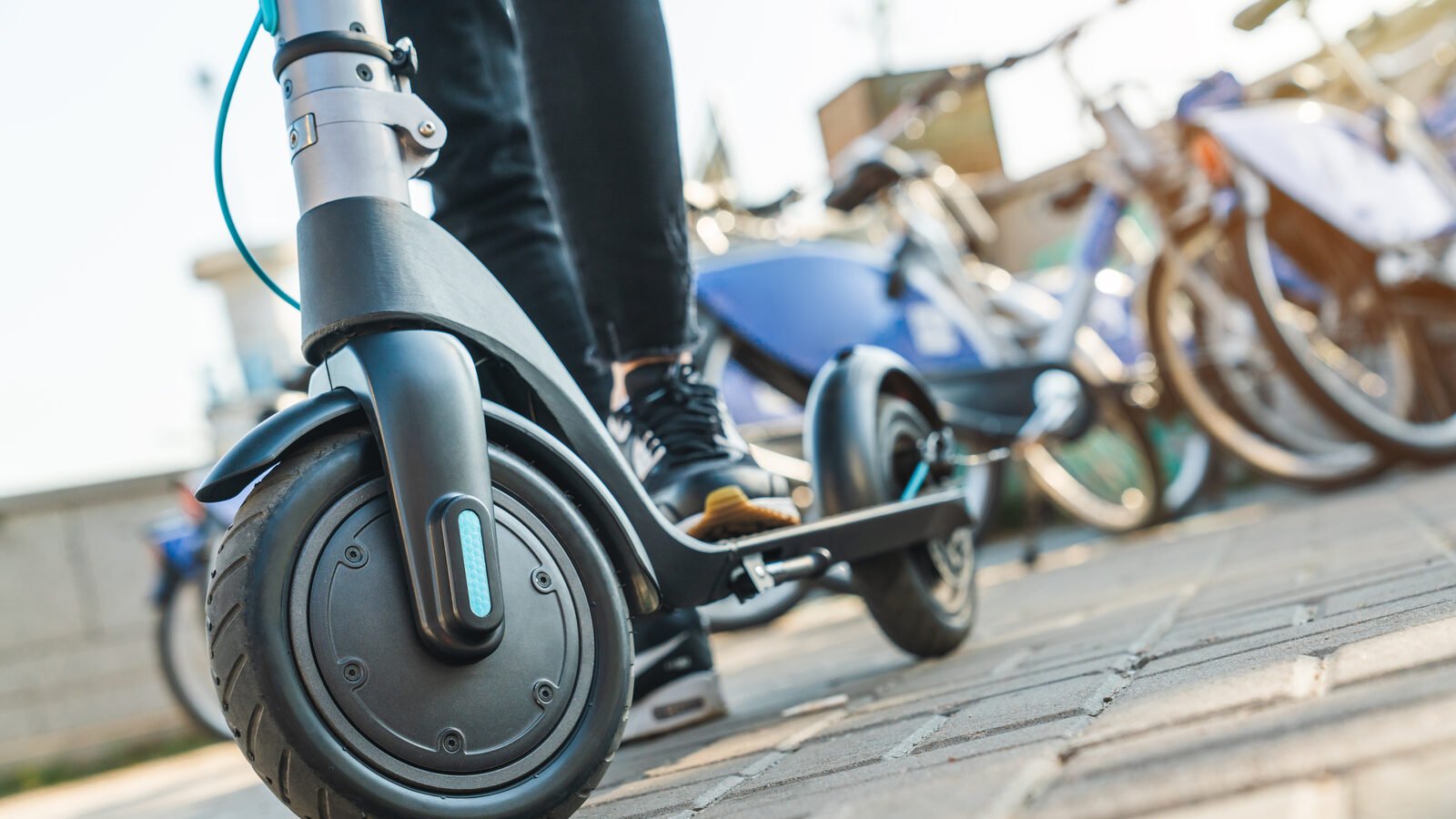
Close-up of a rider's feet on an electric scooter deck. Photo for illustration.
Key points
- Legal terms (PMD, legal-class, private-land-only) describe where a scooter can be ridden, not how good it is.
- Technical spec terms (IP rating, regenerative braking, dual motor, Wh) describe the machine itself, independent of legality.
- Enforcement terms (dyno testing, BAC limit) are increasingly relevant as states tighten compliance checks.
- None of these terms are unique to any one brand, they're used consistently across manufacturers and reviewers.
Legal and classification terms
PMD (Personal Mobility Device): The regulatory category most Australian states use to cover e-scooters, e-skateboards and e-unicycles, distinct from e-bikes, bicycles and motor vehicles. See our explainer on legal-class vs private-land e-scooters for how this plays out in practice.
Legal-class capable: A scooter that's either 25 km/h or under on its own, or has a genuine mode limiting it to that speed. The 25 km/h figure comes from a National Transport Commission policy decision, see our explainer on why the speed limit is 25 km/h.
Private-land-only: A scooter with no way to be limited to 25 km/h. Legal to own, not legal to ride on any public path or road in Australia.
EN 15194: The European standard used in several Australian states (Queensland among them) to define what counts as a compliant e-bike. Increasingly referenced in enforcement of e-bikes specifically, less directly relevant to e-scooter classification.
CTP (Compulsory Third Party insurance): The insurance required for registered motor vehicles like cars and mopeds. Legal-class e-scooters, being unregistered, generally aren't covered by an equivalent scheme, see our guide on e-scooter insurance.
Enforcement terms
Dyno testing: A roadside device that measures a vehicle's motor performance against resistance, letting police confirm on the spot whether a device exceeds its claimed speed limit. NSW became the first Australian state to trial these for e-bikes.
BAC (Blood Alcohol Concentration) limit: The alcohol threshold applying to e-scooter riders, commonly 0.05 for a compliant legal-class device, similar to driving, and often 0.00 for a non-compliant device in states that make the distinction.
Seizure powers: The legal authority given to police to confiscate a non-compliant device, increasingly paired with destruction powers in some states for devices that repeatedly breach the rules.
Technical and spec terms
IP rating (Ingress Protection): A two-digit code (for example IP54 or IPX5) describing resistance to dust and water. Higher numbers generally indicate better sealing, but even well-rated scooters typically aren't designed for submersion or direct high-pressure water.
Regenerative braking: A system using the motor in reverse as a generator during braking, recovering some energy back to the battery while providing supplementary braking force, in addition to the scooter's main mechanical brakes, not a replacement for them.
Dual motor: A scooter with a motor in both wheels rather than one, generally meaning more power, better hill-climbing and improved traction, at the cost of extra weight and, usually, a higher price and top speed that puts the scooter outside the legal-class category.
Hydraulic disc brake: A braking system using fluid pressure to actuate the brake caliper, generally offering stronger, more consistent stopping power than a cable-actuated (mechanical) disc or drum brake, particularly in wet conditions.
Wh (Watt-hours): The unit used to describe battery capacity, a rough proxy for range. Also the unit airlines use to set lithium battery restrictions, most e-scooter batteries exceed the thresholds allowed in passenger baggage, see our guide on flying with an e-scooter.
BMS (Battery Management System): The electronics inside a battery pack that monitor and protect individual cells, managing charging, discharging and temperature to prevent damage or, in a worst case, fire. See our guide to battery care and fire safety.
Throttle vs pedal-assist: A distinction more relevant to e-bikes than e-scooters: throttle provides power on demand with no pedalling or pushing required, pedal-assist only boosts power you're already providing. Most e-scooters are throttle-controlled by design.
Physical parts
Deck: The flat platform you stand on, positioned between the front and rear wheels.
Stem: The vertical post connecting the handlebars to the deck, often the folding point on commuter scooters.
Speed-limiting mode: A switchable setting (sometimes called eco mode or a similar name) that caps a scooter's top speed below its maximum, the mechanism that makes a fast scooter legal-class capable when engaged.
Realistic range: The distance a scooter actually covers under normal riding conditions, typically meaningfully lower than the manufacturer's claimed range, which is usually measured under ideal, low-speed, flat-ground conditions.
Battery cycle life: The number of full charge-discharge cycles a battery can handle before its capacity noticeably degrades, the main factor behind how long an e-scooter battery lasts in practice, see our guide on battery lifespan.
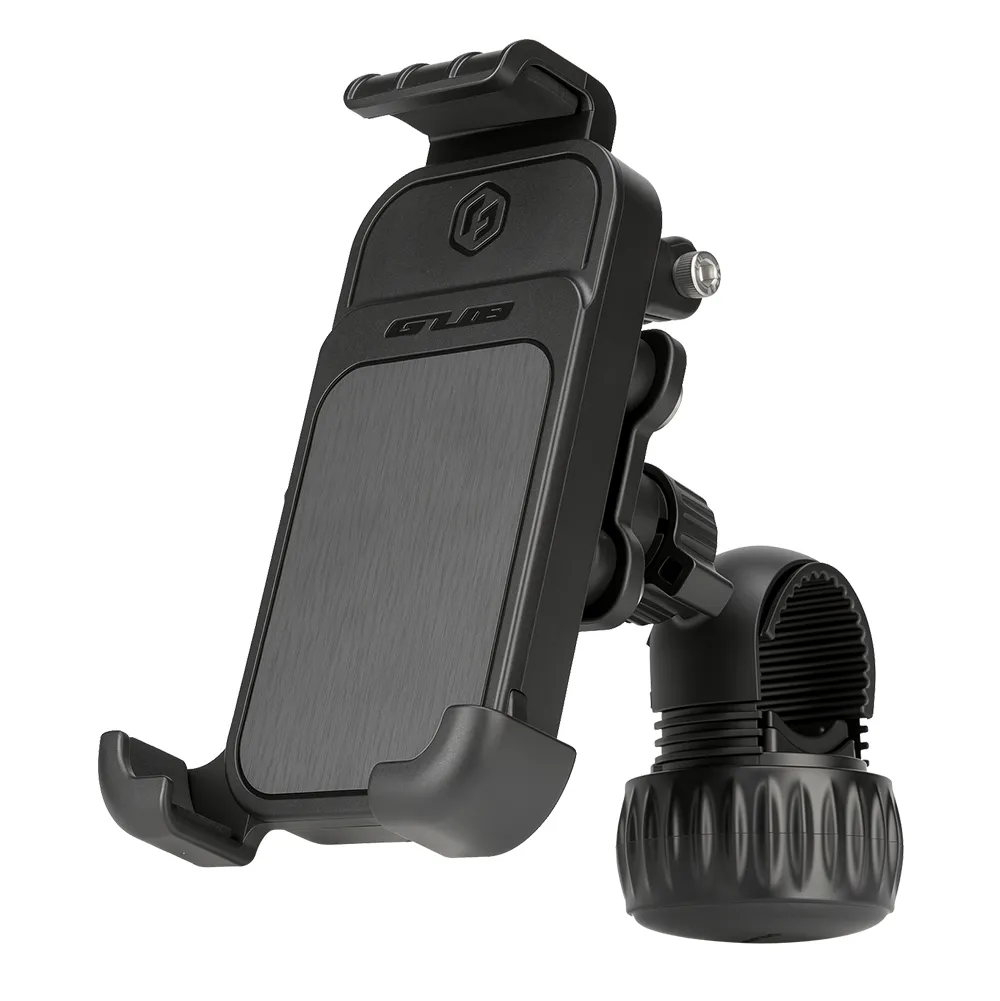
Phone mounts that fit e-scooter stems and bars and hold on over potholes and tram tracks. Ships from Australia, free shipping over $60.


Law updates, new models and buying guides for Australian e-scooter riders, straight to your inbox.
None of this terminology is meant to be intimidating, once you know that "legal-class capable" is about the mode, not the top speed, and that "claimed range" and "realistic range" are two genuinely different numbers, most spec sheets and reviews become a lot easier to actually compare.
Frequently asked questions
What does PMD stand for?
Personal Mobility Device, the regulatory category most Australian states use to cover e-scooters, e-skateboards and e-unicycles, distinct from e-bikes, bicycles and motor vehicles.
What does IP rating mean on an e-scooter?
Ingress Protection rating, a two-digit code describing resistance to dust and water, for example IP54 or IPX5. Higher numbers generally mean better sealing, but even a well-rated scooter typically isn't rated for submersion or direct high-pressure water.
What is regenerative braking on an e-scooter?
A system that uses the motor in reverse as a generator when braking, recovering some energy back into the battery and providing a degree of braking force, in addition to (not instead of) the scooter's main mechanical brakes.
What's the difference between throttle and pedal-assist?
This distinction matters more for e-bikes than e-scooters, but comes up in comparisons: throttle means the motor provides power on demand without any pedalling or pushing required, pedal-assist means the motor only assists power you're already providing yourself. Most e-scooters are throttle-controlled by design.
Sources
- National Transport Commission: Barriers to the safe use of personal mobility devices (checked 19 Jul 2026)