
After the Murwillumbah fire: five charging rules for e-scooter owners
In the early hours of 31 August 2026, a fire believed to have started with e-bike lithium-ion batteries destroyed a family home and business in South Murwillumbah in northern NSW. The family escaped, but the house and around 70 e-bikes were lost. E-scooters use the same kind of battery, so here are the charging rules fire authorities want every owner to follow.
Last reviewed 26 Sep 2026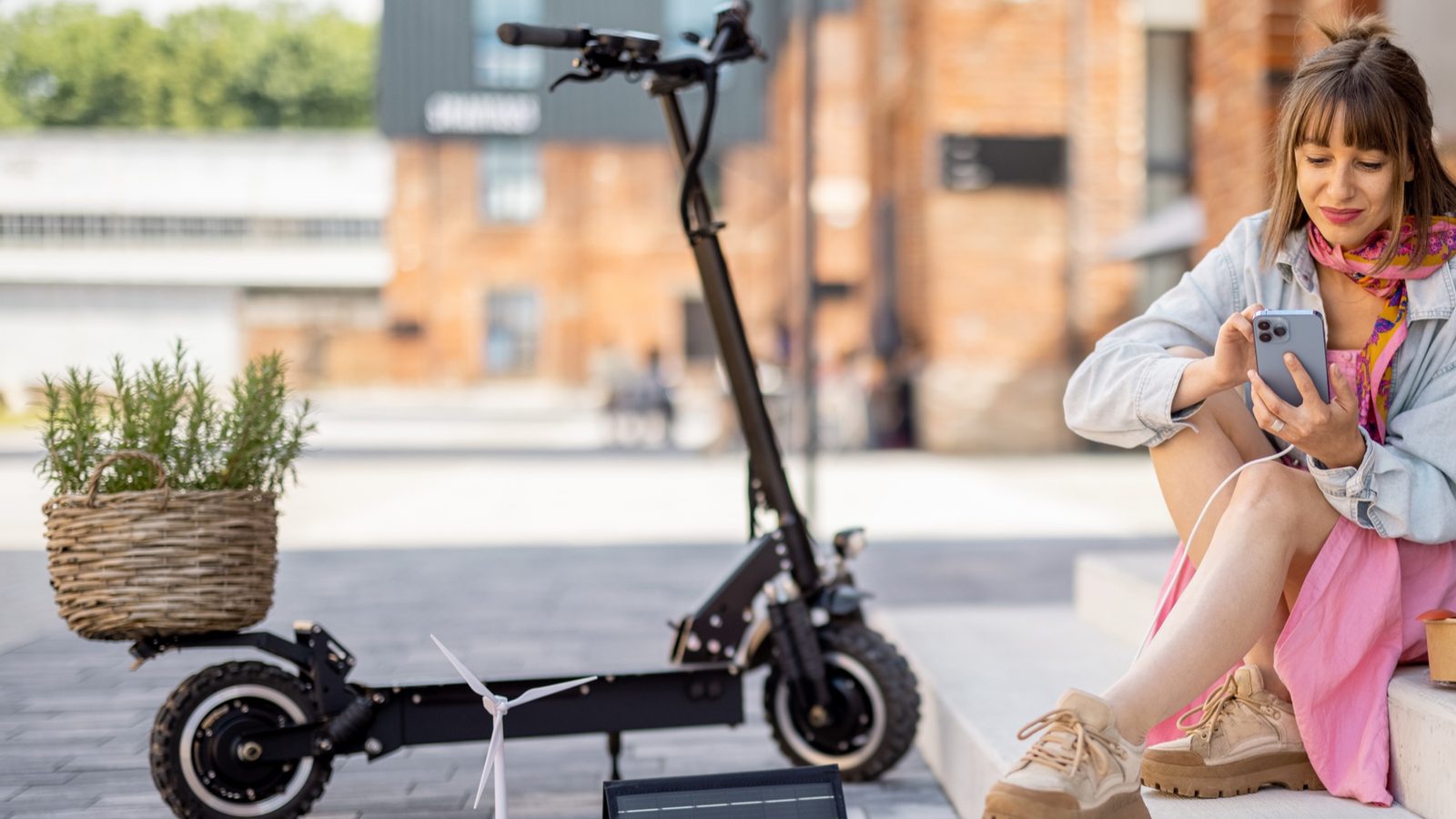
Electric scooter parked on a city footpath beside a rider sitting on the steps. Photo for illustration.
Key points
- The Murwillumbah fire started around 3am on 31 August 2026 in a home that also ran an e-bike business. Crews took about three hours to bring it under control.
- Around 70 e-bikes worth roughly $500,000 were lost, and the owner was taken to hospital. The family of four escaped.
- Fire and Rescue NSW calls lithium-ion batteries the fastest growing fire risk in the state.
- Charge while you are awake and at home, on a hard surface, away from bedrooms and exits, with a working smoke or heat alarm nearby.
- Use the charger supplied with your scooter, unplug when full, and stop using any battery that swells, leaks, smells or gets unusually hot.
The fire in South Murwillumbah started at about 3am on 31 August 2026 in a renovated home that doubled as an e-bike business. According to the ABC, crews needed around three hours to get it under control. The family of four escaped, the owner was taken to hospital, and the home and roughly 70 e-bikes, worth about $500,000, were destroyed. Lithium-ion batteries stored under the house are believed to have started it.
A fire service inspector at the scene told the ABC that once lithium batteries start burning they are very difficult to put out. That is the lesson for scooter owners too. An e-scooter battery is the same technology, often charged in the same places: hallways, lounge rooms and bedrooms, overnight.
Five charging rules from fire authorities
Fire and Rescue NSW describes lithium-ion batteries as the fastest growing fire risk in NSW. Its advice for e-bike and e-scooter owners comes down to five habits.
- Charge while you are awake and at home. Do not leave a scooter charging overnight while you sleep or while you are out.
- Charge in the right place. Use a hard, non-flammable surface such as concrete, away from bedrooms and living areas and clear of your exits. A garage, carport or shed is better than a hallway.
- Have an alarm where you charge. Make sure a working smoke alarm or heat alarm covers the charging spot.
- Use the right charger and unplug when full. Only use the charger approved for your scooter, and disconnect it once the battery is full.
- Retire a damaged battery. Swelling, bulging, leaks, cracks, dents, heat, vapour or smoke are all signs to stop using it.
If a battery is damaged
Fire and Rescue NSW says damaged batteries should be stored outside, at least three metres from buildings, and never put in household rubbish or recycling bins. Take them to a Community Recycling Centre or a Household Chemical CleanOut event. If a battery is smoking or on fire, get everyone out and call 000.
What this means when you buy
Regulators are targeting cheap, unbranded batteries, and the federal government has directed the ACCC to build a national safety standard for e-scooters and e-bikes. Until it lands, buy from a known brand with an Australian distributor, keep the original charger, and avoid modified or unlocked scooters. Our battery care and fire safety guide covers charging, storage and battery life in more depth, and how to store your scooter covers long breaks. For the national standard, see our story on what the new safety standard means for buyers.
Law updates, new models and buying guides for Australian e-scooter riders, straight to your inbox.
The safest charge is one you are awake for, on a hard floor, well away from the way out.
Frequently asked questions
Is it safe to charge an e-scooter overnight?
Fire and Rescue NSW advises against it. Charge while you are awake and at home, and unplug once the battery is full.
Where should I charge my e-scooter?
On a hard, non-flammable surface such as concrete, away from bedrooms, living areas and exits, in a spot covered by a working smoke or heat alarm. A garage, carport or shed is better than inside the house.
What are the warning signs of a failing e-scooter battery?
Swelling or bulging, leaking, cracks, dents or punctures, unusual heat, vapour or smoke. Stop using the battery straight away.
How do I dispose of a damaged e-scooter battery?
Store it outside, at least three metres from buildings, and take it to a Community Recycling Centre or Household Chemical CleanOut event. Never put it in household rubbish or recycling bins.
Sources
- ABC News: E-bike battery fire engulfs Murwillumbah family's house and business (31 August 2026) (checked 26 Sep 2026)
- Fire and Rescue NSW: E-bike and e-scooter battery safety (checked 26 Sep 2026)
- ACCC Product Safety: E-bikes, e-scooters and other e-micromobility devices (checked 26 Sep 2026)